This guide shows you how to reduce stress in small, doable ways, starting with moves that take five minutes or less. You do not need a spa day or a free weekend. You just need a few tools that work when life gets loud.
Key Takeaways
• Stress is your body’s reaction to pressure. It is normal, and you can calm it.
• Slow breathing, a short walk, and writing things down work in under five minutes.
• To get rid of stress for good, find the source and change what you can.
Why Does Stress Feel So Heavy in Your Body?
Stress feels heavy because your body treats pressure like danger. It releases hormones that speed up your heart, tighten your muscles, and sharpen your focus. That helps in short bursts. It wears you down when it never stops.
The National Institute of Mental Health explains that stress is a reaction to an outside cause, and it usually fades once the problem is solved. Anxiety is different. It is an inner reaction that can stay even when no threat is near.
Your mind and body work as a team here, so calming one often helps the other. Our guide on the mind body connection shows how.
A lot of people in this situation feel guilty for being stressed. Stress is not a weakness. It is a signal that you are carrying a lot.
How to Reduce Stress in Five Minutes: 9 Quick Moves
These nine moves can lower stress in five minutes or less. Pick the one that fits where you are right now. You do not need to do them all.
1. Breathe out longer. Breathe in for four counts and out for six. A slow breath out tells your body it is safe. Try five rounds.
2. Walk outside. Even five minutes helps. Fresh air and movement give your mind a break from the problem.
3. Tense and release your muscles. Squeeze your fists for five seconds, then let go. Work from your feet up to your face. Many therapists teach this as progressive muscle relaxation.
4. Name what you feel. Say it plainly: I feel overwhelmed. Putting a word on a feeling often takes some of the heat out of it.
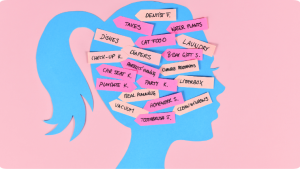
5. Do a brain dump. Write every task and worry on paper. Your mind stops juggling them once they live on the page.
6. Stretch your neck and shoulders. Stress likes to hide here. Roll your shoulders back and slowly tilt your head from side to side.
7. Play a song you love. Music can shift your mood fast. Pick one that calms you, or one you can sing along to.
8. Text someone you trust. You do not have to explain it all. A short chat can make you feel less alone.
9. Shrink your list. Pick one task that matters today and let the rest wait. Doing one thing well beats doing ten things halfway.
What tends to happen is that stress feels like one giant cloud. Then you write it down and see six small tasks and two things you cannot control. A cloud becomes a list, and a list is easier to handle.
If your thoughts keep looping, these tips to get rid of overthinking can help.
Try this: Set a five-minute timer. Do move 1 and move 5 back to back. Breathe first, then write.
How to Get Rid of Stress at the Source
You cannot remove every stress, but you can lower the load by finding what causes it and changing what you can. Quick moves calm you in the moment. Fixing the cause keeps stress from coming back tomorrow.
Start by listing what stresses you. Then sort each item. This table shows how.
| Type of stress | Example | What to do |
| You can change it | Too many tasks, a packed schedule | Cut it, delay it, or ask for help |
| You can partly change it | A tough boss, a money worry | Set limits, make a plan, and get advice |
| You cannot change it | Traffic, other people’s moods, the past | Work on your response: breathe, accept, let go |
Most people spend their energy on the last row. Moving that energy to the first row is often where relief starts. Psychologists who study stress often point out that feeling some control makes pressure easier to bear.
Sometimes the stress is a person. If a relationship leaves you tense most days, read about the signs of a toxic relationship to see your situation more clearly.
Try this: Write your top three stressors. Next to each one, write one tiny action you can take this week.
What Daily Habits Keep Stress From Piling Up?
Daily habits keep stress from piling up by giving your body and mind regular rest. Think of them as a buffer. They will not remove stress, but they help you handle it.
• Sleep on a schedule. Tired brains react more to small problems. Try to go to bed and wake up at about the same time each day.
• Move most days. Walking, dancing, and stretching all count. Pick something you like, so you keep doing it.
• Say no sometimes. Every yes costs time and energy. A polite no protects both.
• Cut back on caffeine and late-night scrolling. Both can keep your body wired. Try swapping your last coffee of the day for water or tea.
• Protect time for people and play. Friends, hobbies, and fun are not extras. Make room for something that is only yours, and see our ideas on how to be creative.
Habits work slowly. Give each one a few weeks before you decide it is not for you.
When Is Stress a Sign You Need More Support?
Stress needs more support when it lasts for weeks, hurts your sleep, health, or work, or turns into constant dread. At that point, tips alone may not be enough. A doctor or therapist can help.
Watch for these signs:
• You feel on edge most days, or panic comes out of nowhere. This may be anxiety. Our guide on how to deal with anxiety explains the difference and your next steps.
• You cannot sleep, eat, or focus for weeks. Your body is telling you it needs more than a quick fix.
• You lean on alcohol or other substances to cope. That can make stress worse over time.
• You feel hopeless or think about hurting yourself. Call your local emergency number or a crisis line right now, or reach out to someone you trust.
Asking for help is a smart move, not a failure.
Final Thoughts
Try this tonight: pick one habit from this list and do it before bed. Keep it small. If this resonated with you, you might also want to read: how to align your mind, body, and soul .
You do not have to carry it all at once. Now you know how to reduce stress in small steps: breathe, write it down, sort what you can change, and protect your rest. Some days will still feel heavy, and that is okay. Be kind to yourself on those days. Pick one move, try it tonight, and notice how your shoulders feel afterward. You deserve a break, even a five-minute one.
Frequently Asked Questions
Slow breathing is one of the fastest. Breathe in for four counts and out for six, for about one minute. Add a short walk if you can.
Try slow breathing at your desk, a shoulder stretch, or a quick brain dump on paper. Each takes a minute or two. Then pick the one task that matters most and let the rest wait.
Many people do, but it is not a healthy way to live. Constant stress can affect your sleep, mood, and health. Try the habits above, and see a professional if it lasts for weeks.
For many people, yes. Movement can ease muscle tension and lift your mood. You do not need a hard workout, because a walk counts.
Quick moves can help within minutes. Habits like sleep and movement often take a few weeks to show results. Big sources of stress, like a job or money problem, may take longer to fix.